Cash game players are used to playing with hundreds of big blinds in their stacks, but playing deep stacked is a luxury that MTT players often can’t afford. In fact, if you are a tournament poker player, you are probably all too familiar with the concept of playing with a short stack and having to survive with such a stack for hours.
The escalating blinds in tournaments inevitably lead to some of the players sitting on a small stack in the late stages of the game, and if you play frequently, you will find yourself in such spots quite often.
Instead of surrendering when you fall onto a short stack territory and simply punch your stack away, you can learn proper short stack strategy and play the short stack like the best tournament players out there.
Tip #3: – Adjusting Your Opening Ranges
When playing with deeper stacks, hands like suited connectors can often be part of your opening range from later positions. For instance, you would not mind opening 65s in a late position to have more board coverage on various flops.
However, as your stack dwindles to under 20 big blinds, you will have far fewer opportunities to even play post-flop. Even when you do, a hand like this will rarely flop top pair, and the draws you make with it won’t be too spectacular either.
Instead of hands like this, you will do much better opening more hands that contain big cards and fewer hands that contain small cards in general.
For example, a hand like KT off-suit will do better as an open on a short stack than 65s, as it will allow you to flop top pair or open-enders with an overcard and comfortably put your entire stack in.
When choosing preflop hands as a short stack, you should consider later streets and understand that you will have far less room to maneuver on the flop, turn, or river than you would with a bigger stack.
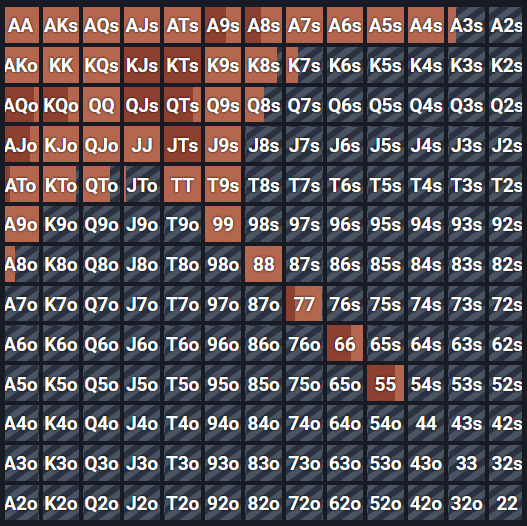
Tip #4 – Add Limps to Your Strategy
Limping is not a very strong play, and you should avoid limping when first into a pot in most situations.
However, as you start getting into the short stack territory, there can be some merit to adding limps into your strategy and playing some hands as limps.
The reason to limp instead of raise is because you may be in an awkward spot where you have a hand you know is strong enough to play, but you don’t quite want to face a 3-bet and get blown off your equity.
By limping such a hand, like QTs or J9s, you may get a chance to see a cheap flop, realize your equity, and capitalize on your position on the flop.
Of course, in order to balance out your limps, you will need to also limp some strong hands, which will allow you to go all-in sometimes if the blinds decide to attack.
Tip #5 – Always Raise Small
As your stack gets shorter and you enter the later stages of the tournament, you should raise very small as the norm. In fact, a minimum opening raise of just 2x works like a charm and usually achieves the exact same results as a bigger raise when you are a short stack.
Generally speaking, you will usually not get too many calls from players other than the big blind when you raise from a short stack, which means you want to risk the minimum to try and pick up the blinds.
When you raise 2x and get re-raised, you will know very clearly what to do with most of your hands. Get it all in with your strong hands and fold the ones you are not prepared to commit your stack with.
Mix the adjustment of your opening raise size with the adjustment to a more linear opening range, and you will end up finding yourself in more favorable situations overall.